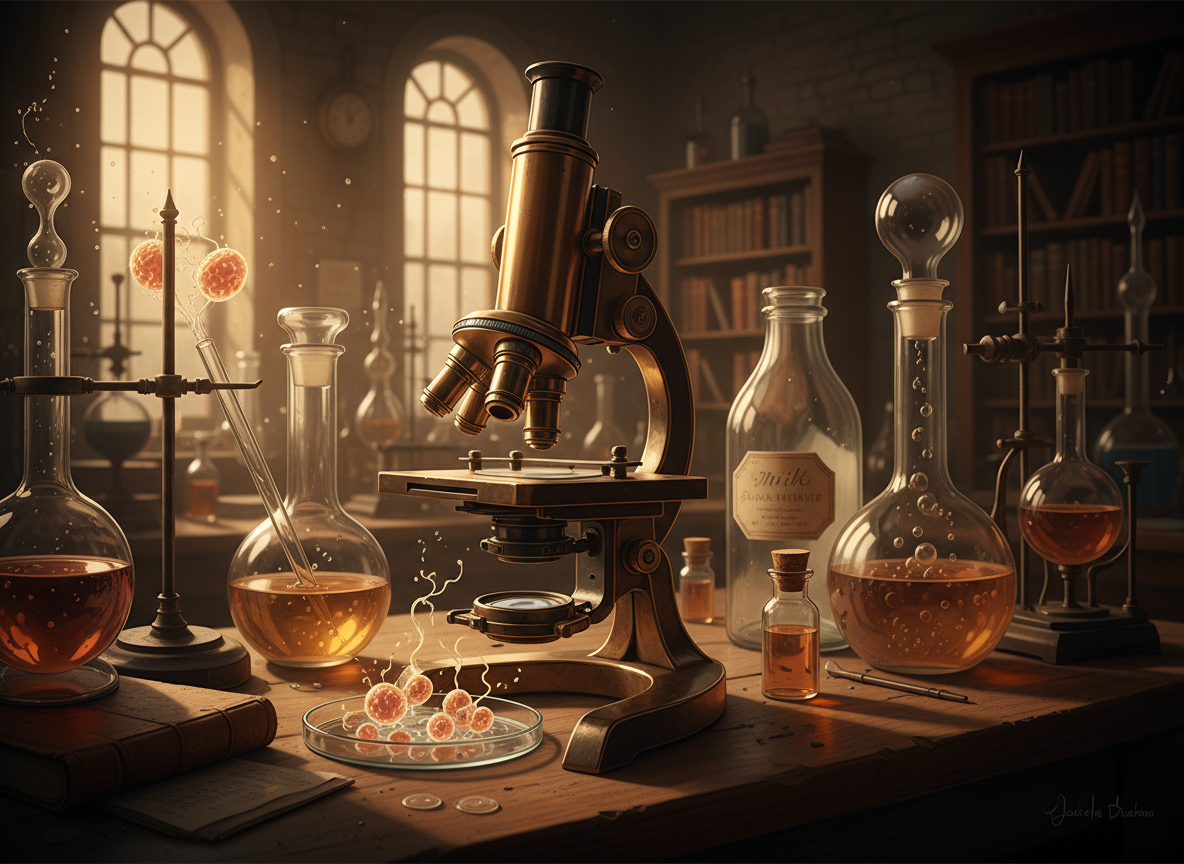
Louis Pasteur helped change the way scientists understood microbes, disease and fermentation. His experiments contributed to the rise of germ theory, helped overturn the idea of spontaneous generation and led to practical advances that still carry his name today.
What did Louis Pasteur discover?
Pasteur’s career crossed chemistry, microbiology and medicine. His early research on molecular asymmetry was followed by studies of fermentation, where he showed that microorganisms could drive chemical changes. That insight had consequences for food production, disease research and laboratory science.
Pasteurization and fermentation
The process now called pasteurization uses controlled heating to reduce harmful microorganisms and spoilage organisms in products such as milk and other liquids. The idea grew from Pasteur’s investigations into why wine and beer spoiled.
Germ theory and vaccination
Pasteur’s work strengthened the case that microorganisms could cause disease. He also helped develop early vaccines, including work associated with anthrax and rabies. These achievements became part of a broader transformation in nineteenth-century medicine and public health.
Why Pasteur’s legacy matters
Modern microbiology was built by many researchers, but Pasteur’s ability to connect laboratory experiments with practical problems made his influence unusually wide. His name remains linked to food safety, infectious disease research and the history of vaccination.
Read more from Muslance
- William Harvey and the Experiment That Changed How We Understand Blood
- Accelerated Biological Aging May Be Hitting Younger Adults
Watch more documentaries on Muslance on YouTube.
Leave a Reply