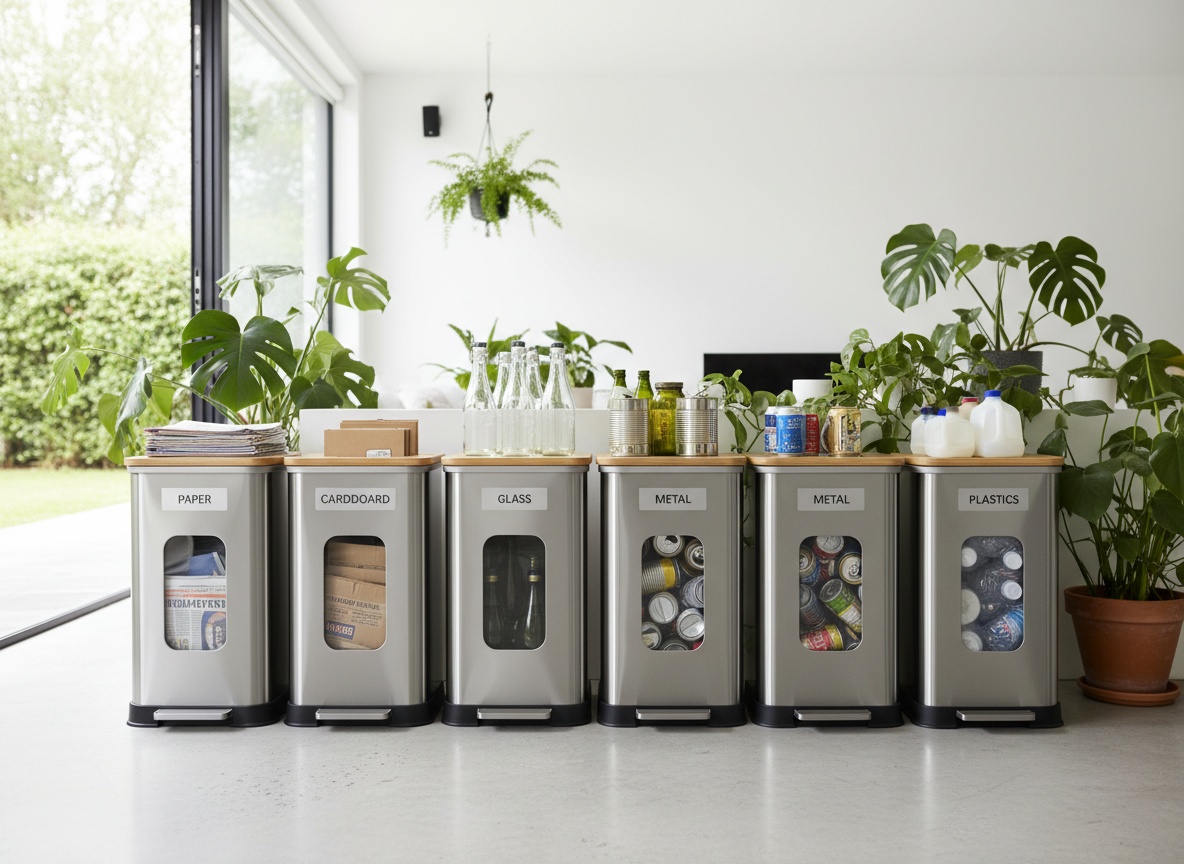
Recycling works best when the right materials enter the right collection system. Putting everything with a recycling symbol into one bin can actually create contamination and make processing more difficult.
Start with local rules
Recycling programs differ by city and country. The most important step is checking what your local collector actually accepts. A material may be technically recyclable but not supported by the facilities serving your area.
Paper and cardboard
Clean, dry paper and cardboard are widely accepted in many systems. Food-soiled paper, waxed materials and mixed-material packaging may require different handling.
Plastic
Plastic recycling is more complicated than the number printed on a container suggests. Resin codes identify plastic types; they do not guarantee that a local facility accepts every item. Bottles and rigid containers are often easier to process than films and mixed plastics.
Glass and metal
Glass bottles, jars and metal cans are commonly recyclable, but rules for colors, lids and broken glass vary. Rinsing containers can help reduce contamination and odors.
Clothing and textiles
Textiles usually do not belong in curbside recycling bins. Reuse, donation, repair and dedicated textile collection programs are often better routes.
The best recycling habit
Reduce and reuse before recycling whenever practical. Buying fewer disposable products and using items longer can avoid waste before it reaches any processing facility.
Read more from Muslance
Watch more documentaries and explainers on Muslance on YouTube.
Leave a Reply