MUSLANCE / GLOBAL TRADE
The Panama Canal is only about 80 kilometers long, but it sits inside a much larger system of trade, energy, shipping schedules and geopolitical influence. Panama does not control the world economy. It does, however, control a route that can change the cost and timing of moving cargo between the Atlantic and Pacific—and that creates leverage.
That leverage was not automatic. For most of the canal’s modern history, the central political question was not simply who used the waterway, but who controlled it. The answer changed at the end of the twentieth century, when Panama moved from hosting a strategically vital canal to administering it directly.
From foreign control to Panamanian control
The United States acquired the rights to build and operate the canal in the early 1900s, and the waterway opened in 1914. The arrangement remained a source of political tension for decades. In 1977, U.S. President Jimmy Carter and Panamanian leader Omar Torrijos signed the Torrijos-Carter Treaties, creating the framework for a gradual transfer. On December 31, 1999, Panama assumed full jurisdiction and operational control of the canal.
The transfer changed the canal from a strategic asset located in Panama into a strategic asset managed by Panama. The distinction matters. Control over operating rules, investment, transit capacity and pricing gave the country a direct role in managing one of the world’s most important maritime chokepoints.
Why the canal matters to global trade
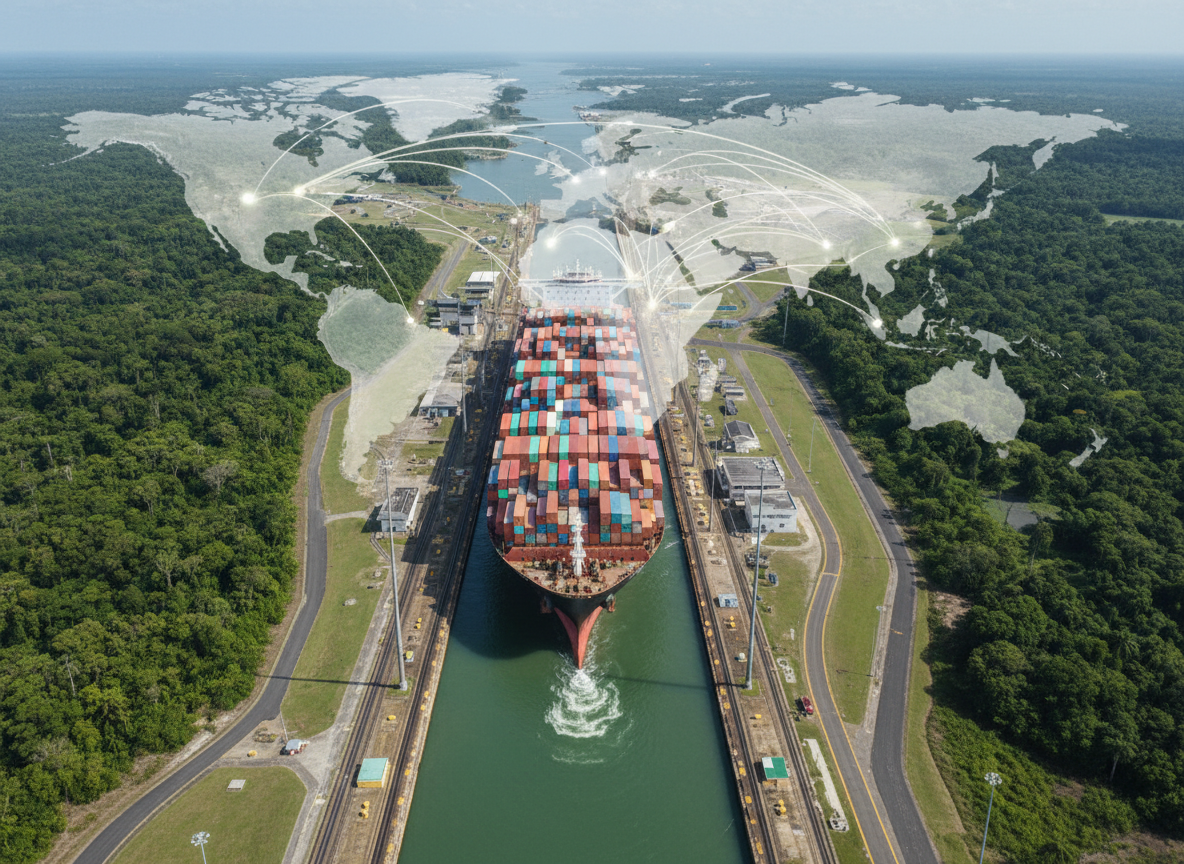
The canal connects the Atlantic and Pacific through a lock system that lifts vessels to the level of Gatun Lake before lowering them back to sea level. That engineering shortcut avoids the much longer route around South America and makes the canal especially important for container shipping, energy cargoes, grains and trade linked to the United States.
Its power comes from time saved. Shipping is not only about distance; it is about vessel availability, fuel, crew costs, inventory timing and whether a ship can make its next scheduled port call. A shorter route can therefore create value far beyond the toll charged for a single transit.
Control became an operating system
Panama’s leverage is strongest when the canal works as a reliable operating system rather than as a political symbol. The Panama Canal Authority allocates transit slots, manages locks and water, adjusts operating rules and charges for access. In fiscal year 2025, the canal recorded 13,404 transits, up 19.3% from the previous fiscal year. Revenue reached about 5.705 billion balboas, or roughly the same amount in U.S. dollars because the balboa is pegged at parity with the dollar.
Those numbers show why canal management matters to Panama’s economy. The country is not simply collecting a toll at a gate. It is operating a scarce piece of infrastructure whose value changes with vessel size, trade flows, congestion, water availability and the alternatives available to shipping companies.
The drought exposed the limit of leverage
The canal’s strategic position does not eliminate physical constraints. During the 2023–2024 drought, low water levels forced the authority to restrict daily transits and vessel drafts. The disruption was serious enough that the International Monetary Fund estimated trade through the canal fell by 32% year over year in the first two months of 2024.
This is the central paradox of the Panama Canal: the same geography that gives Panama leverage also creates dependence on water. The canal requires freshwater to operate its locks, and the surrounding watershed must support both canal operations and human consumption. A chokepoint can be strategically valuable while still being environmentally vulnerable.
The canal competes with alternatives
Panama cannot price or restrict the canal without considering the choices available to ship operators. Some cargo can move through U.S. intermodal rail networks. Other vessels can sail around Cape Horn or choose different trade patterns. Ports, railroads and logistics hubs also compete for parts of the same value chain.
That does not make the canal weak. It explains the nature of its power. Panama’s leverage is strongest when using the canal is cheaper, faster and more predictable than the alternatives. The country benefits when global trade depends on the route, but it must keep the route attractive enough that customers continue to depend on it.
Why the Panama Canal is more than a canal
The waterway also supports a broader logistics economy. Panama functions as a transshipment and services hub, with ports on both sides of the isthmus, financial and logistics services, and infrastructure that connects maritime trade to regional markets. The canal therefore creates leverage not only through tolls, but through the economic activity that clusters around a strategic route.
This helps explain why canal sovereignty mattered so much. The transfer was not merely about replacing one flag with another. It gave Panama the ability to integrate a global infrastructure asset into its own development strategy.
What changed after 1999?
- Operational control: Panama became responsible for the canal’s management, maintenance and modernization.
- Revenue control: Canal income became directly tied to Panamanian public finances and investment decisions.
- Strategic flexibility: Panama could expand capacity, revise commercial programs and respond to changing shipping demand.
- National responsibility: The country also inherited the risks—water shortages, maintenance costs, climate pressure and competition.
Watch the Muslance documentary
Frequently asked questions
Who owns the Panama Canal today?
The canal is under Panamanian control and is administered by the Panama Canal Authority, an autonomous entity established under Panama’s legal framework.
When did Panama take full control of the canal?
Panama assumed full jurisdiction and operational control on December 31, 1999, following the transition established by the 1977 Torrijos-Carter Treaties.
Why is the canal vulnerable to drought?
The lock system depends heavily on freshwater stored in the canal watershed. Low rainfall and low lake levels can force restrictions on vessel drafts and the number of daily transits.
Read more
- Suez Canal Revenue Shock: How Red Sea Disruptions Hit Egypt
- China’s Belt and Road: What Happened After the Infrastructure Boom?
- Explore 73 Media projects and the Muslance research system
Leave a Reply